

Video Production Agency Leeds: What Local Really Buys You
When people search for a video production agency in Leeds, they usually assume “local” just means “closer” — a crew that can be on site without a travel invoice attached. That’s part of it. But proximity is the least interesting thing a good local agency gives you. The bigger value is in the things that are easy to miss on a website: how well they understand your sector, how they plan the work, and whether the finished video actually goes on to do a job for the business.
Leeds and the wider Yorkshire region are dense with manufacturers, engineering firms, logistics operators and industrial tech companies — exactly the kind of businesses that have plenty to show and often struggle to show it clearly. This guide walks through what a video production agency in Leeds really does, where being local genuinely matters, and the questions worth asking before you commit to anyone.
What a video production agency actually does (beyond filming)
The word “filming” makes video sound like a single event: a crew turns up, points a camera, and leaves. In practice, the filming day is the shortest part of the job. A capable agency spends far more time on everything around it.
Before anyone touches a camera, there’s the question of what the video is for. A recruitment film, a machine walkthrough, a customer case study and a safety briefing all look different, sound different, and are built differently — because they’re trying to change different behaviours. Good video production services start by pinning down the outcome, then work backwards to the format.
After the shoot comes the part that quietly decides whether the money was well spent: what happens to the footage. One of the most common patterns we see is a business sitting on perfectly good video that never gets used properly — no plan for where it lives, who it’s aimed at, or how it’s cut down for different channels. A single filming day can feed a website, a YouTube channel, a sales deck and months of social clips, but only if that was designed in from the start.
So when you’re comparing agencies, you’re not really comparing camera kit. You’re comparing how they think.
Does “local” still matter for video in 2026?
Plenty of production can be done remotely now, so it’s a fair question. For industrial and technical work, local still earns its keep in a few concrete ways.
Site access and repeat visits. Filming inside a working factory, warehouse or site rarely goes exactly to plan. A machine is down, a shift changes, the light’s wrong, a key person is off. A Leeds-based team can come back next week without it becoming a logistical negotiation. That flexibility is worth more than it sounds.
Understanding the region’s businesses. An agency that works regularly with Yorkshire manufacturers and engineers already speaks the language — they don’t need the basics of your process explained, and they know what tends to land with a technical audience versus what looks like marketing fluff.
Relationships over transactions. Content that keeps working is content that keeps getting made. A local partner you meet in person, who understands how your business changes over the year, will produce more relevant work than a one-off supplier who filmed you once and moved on. If you want a sense of how that plays out, an agency’s case studies and portfolio tell you far more than any list of services.
Trust shows on camera. The videos that consistently hold viewers’ attention tend to be the human ones — the team talking, the founder explaining, a showreel that feels real. That’s easier to capture when the people behind the camera aren’t strangers. It’s also why it’s worth knowing who you’d actually be working with before you commit.
Questions to ask before you hire
A quick checklist to separate a genuine partner from a supplier who’ll simply do what they’re told:
- “What outcome are we aiming for?” If the conversation jumps straight to cameras and day rates without asking what the video is meant to achieve, that’s a flag.
- “Have you worked in our kind of environment?” Industrial sites have their own rules — safety, access, noise, downtime. Experience there saves you time and awkward surprises.
- “What happens to the footage afterwards?” Ask how one shoot turns into multiple usable assets. If there’s no answer, you may be paying for a video that gets watched twice.
- “Can we see results, not just showreels?” Nice-looking work is table stakes. Ask what the video did — enquiries, applications, clearer onboarding, fewer repeated questions.
- “How do you price it?” Understand whether you’re buying a one-off project or something more ongoing. Transparent video production packages make this much easier to compare. Our fuller take on this lives in the guide on how to choose a video production company.’
How we approach it at Shot Blast Media
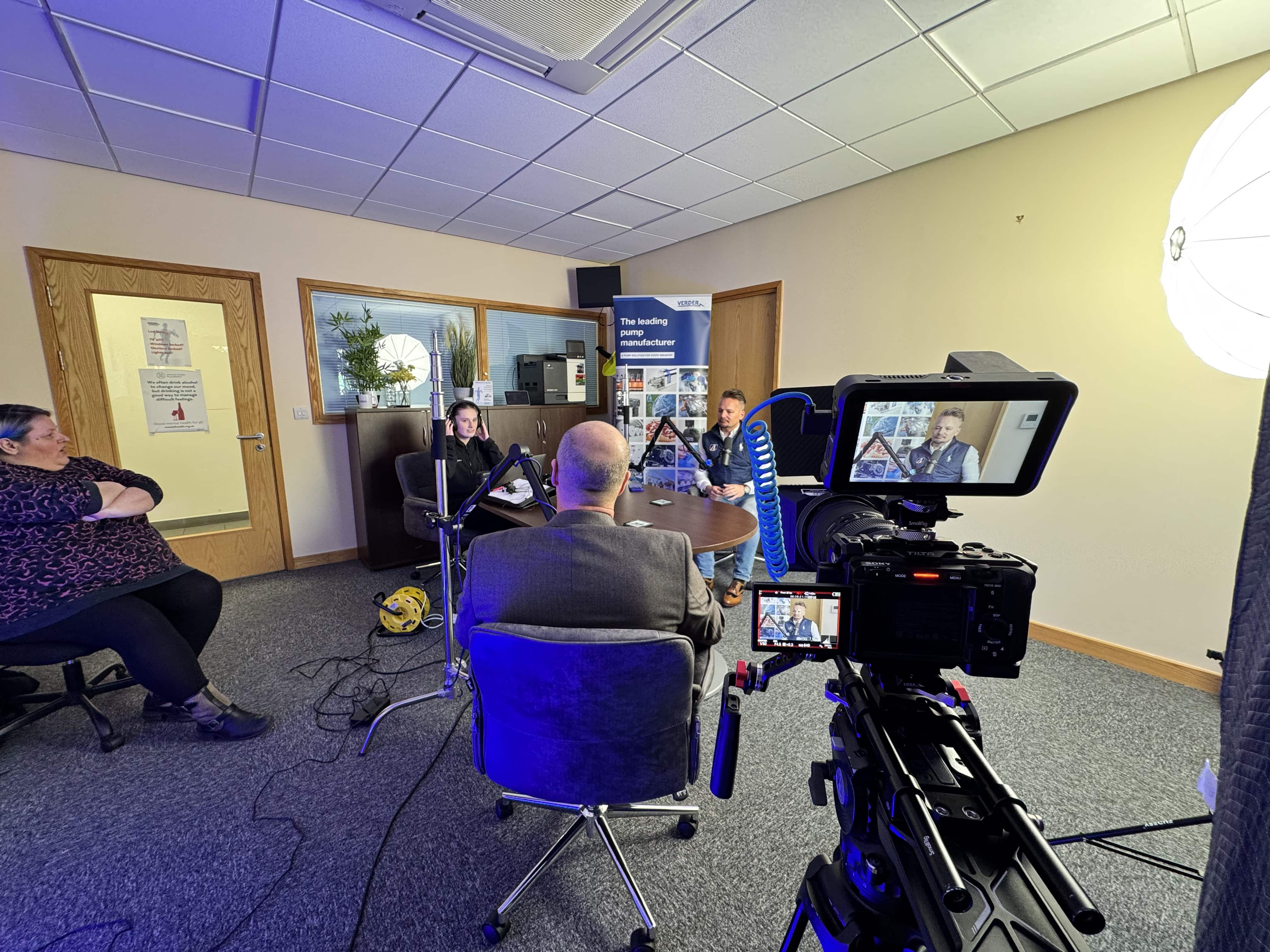
We’re a Leeds-based team that works mostly with industrial and technical businesses, and our bias is simple: strategy first, filming second. Rather than treating a video as a one-off shoot, we plan content as something that runs inside your business and keeps earning its place — whether that’s corporate video for the website, recruitment films, or technical explainers. The goal isn’t a nice video; it’s more enquiries, better recruitment, and clearer communication with the people who matter to you.
That’s the whole point of choosing a local partner over a faceless supplier. The work gets better the longer someone understands your business — and that only happens when they’re close enough to stick around.