

7 Things Product Animation Can Show That a Camera Can’t
Some products are almost impossible to film well. They’re too small, too fast, sealed inside a housing, or the part that matters happens somewhere no lens can reach. That’s where product animation earns its place. Product animation rebuilds your product in 3D so you can show precisely how it works — every component, every movement, every benefit — without the limits of a camera, a working factory floor, or a unit that hasn’t even been manufactured yet.
For industrial, engineering and technical companies, that’s a genuine advantage. Your product might be the most impressive thing about your business, but if buyers can’t see what it does or understand why it’s better, the value stays hidden. Animation pulls it into the open.
Here are seven things product animation can show that filming simply can’t.
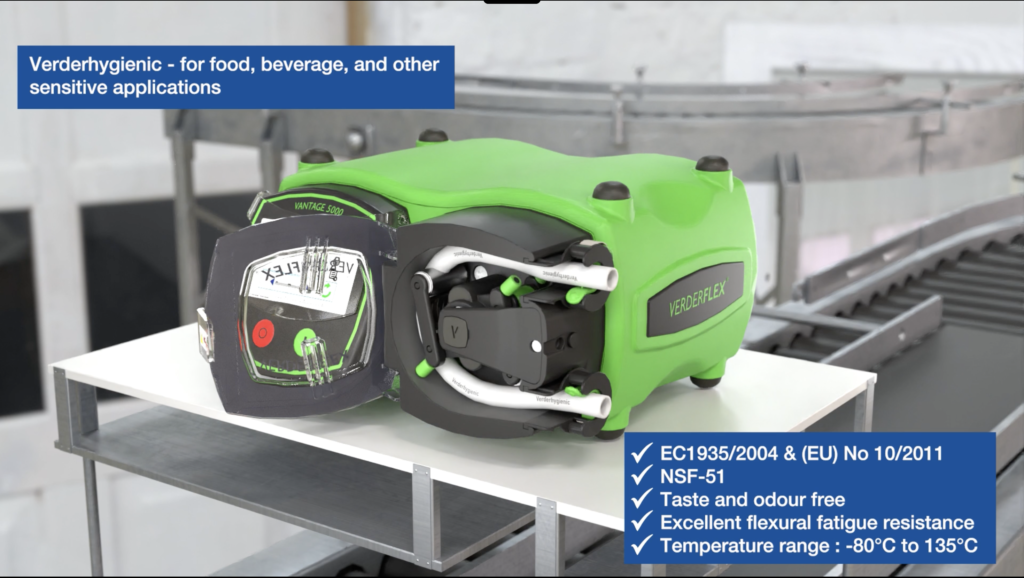
1. The inside of a sealed or solid product
Cutaways are animation’s home turf. A pump, valve, motor, gearbox or enclosure can be peeled open on screen to reveal exactly what happens inside while it runs — with no need to physically cut a working unit in half. For anything where the engineering is the selling point, showing the internals is often the whole pitch.
2. Movement that’s too fast, too slow, or too small to film
Cameras struggle with extremes. A mechanism that fires in milliseconds, a fluid moving through a system, a microscopic tolerance, a slow chemical process — all of these are difficult or impossible to capture cleanly on film. Animation lets you slow it down, speed it up, or scale it up until the viewer can actually follow what’s going on.
3. A product that doesn’t exist yet
You don’t need a finished prototype to animate something. Working from CAD files or engineering drawings, product animation can show a concept long before it comes off the production line. That’s invaluable for pre-launch marketing, investor decks, trade shows, and winning orders for a product that’s still in development.
4. How something is assembled, installed or maintained
Exploded views and step-by-step sequences make assembly and installation obvious in a way a manual never will. The same approach works for maintenance and servicing — show the right order, the right tool, the right part — which makes animation a natural fit alongside e-learning and training content for the people who fit, run and repair your kit.
5. Process and flow across a whole system
Some products only make sense in context — as one part of a larger line, plant or network. Animation can lift you up to see the entire process flow, then drop you into a single component, then back out again. That zoom-in, zoom-out freedom is something a fixed camera on a real site can rarely give you.
6. The benefit, not just the feature
A camera shows what a product looks like. Animation can show what it does for the customer — heat dispersing, load spreading, energy saved, a hazard removed. By visualising the outcome rather than just the object, product animation connects your engineering to the result a buyer actually cares about. That’s the same logic behind strong corporate video: lead with the outcome, not the spec sheet.
7. A hazard or failure without anyone getting hurt
You can’t (and shouldn’t) film a real failure, a fault condition, or a dangerous misuse. Animation can show all three safely, which is why it overlaps so heavily with health and safety animation. Demonstrating what goes wrong — and why your product prevents it — is far more persuasive than telling someone to take your word for it.
Product animation vs live action: which do you need?
This isn’t really an either/or. Plenty of the strongest video production work blends the two — real footage of your team, your site and your people, with animated sequences dropped in exactly where the camera hits its limits.
As a rough guide: reach for live action when the story is human, when trust and credibility matter, or when the product is straightforward to film. Reach for product animation when the important detail is hidden, microscopic, dangerous, or doesn’t physically exist yet. One of the most useful shifts a technical brand can make is to stop trying to film every last part of a complex product, and instead animate the bits that were never going to read well on camera in the first place.
What does product animation cost?
There’s no single price, because “an animation” can mean a 20-second loop of one component or a three-minute explainer covering a whole system. The main things that move the number are length, the level of detail and realism, how many parts and scenes are involved, and whether usable CAD or 3D models already exist or need to be built from scratch.
Because it’s modular, animation also tends to pay back over time: a 3D model built for one video can be reused for the next product variant, a training module, a trade-show loop or a sales clip. The most accurate way to get a real figure for your product is a short conversation about what you’re trying to show and where it’ll be used.
How we approach product animation
We start with the job the animation has to do — who’s watching, what they need to understand, and what decision you want them to make afterwards. From there it’s about choosing the right level of detail (photoreal isn’t always necessary), scripting the sequence so it teaches in a logical order, and building the 3D assets so they can be reused rather than rebuilt every time. The goal is a clear, repeatable explainer that keeps earning its place — not a one-off that looks nice and does nothing.
If you’d like to see the style and quality, our portfolio show animation and other work for industrial and technical businesses.