

Drone Video Production in Action: Capturing a Wind Farm Build From the Air
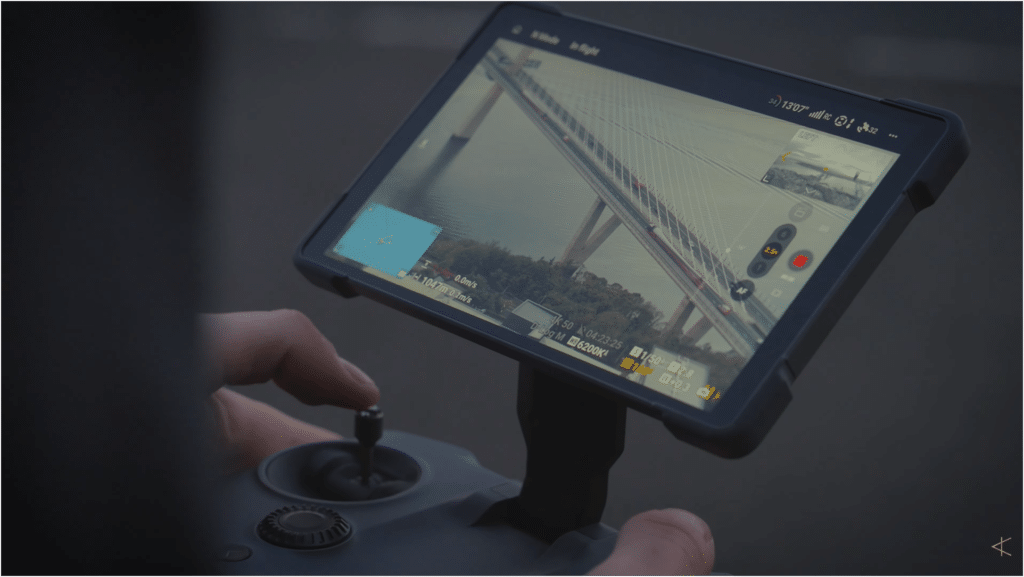
Drone video production has changed the way industrial projects are documented, communicated and understood. From large-scale renewable energy builds to complex infrastructure logistics, drones allow us to tell stories that simply can’t be captured from the ground.
In this behind-the-scenes look, we break down how drone video production was used to document a wind farm project over time — from turbines already standing tall to the intense, high-pressure night shoot capturing turbine blades arriving by convoy. This is a real-world example of how aerial filming brings clarity, scale and narrative to industrial projects.
What Is Drone Video Production?
Drone video production is the process of capturing high-quality video footage using unmanned aerial vehicles (UAVs). In industrial environments, this typically involves:
- A licensed drone pilot
- Pre-planned flight paths and risk assessments
- High-resolution cameras capable of filming in challenging conditions
- Tight coordination with site teams and logistics crews
Unlike traditional filming, drone video production allows cameras to move freely through airspace, revealing scale, progress and perspective that ground cameras can’t achieve.
For sectors like renewables, construction and infrastructure, this isn’t just about visuals. It’s about documentation, storytelling and operational insight.
Filming a Wind Farm Over Time
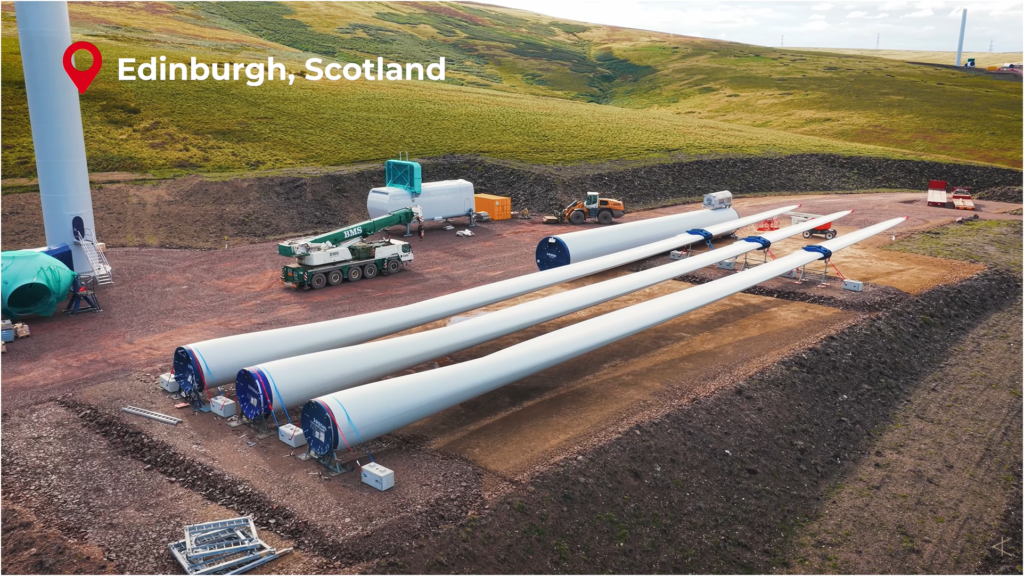
This project wasn’t a one-day shoot. The drone team had been returning to the same wind farm location over the course of a year to capture different stages of the build.
Early filming focused on:
- Established turbines already installed
- Wide aerial “stock” shots of the landscape
- Contextual footage to show scale and environment
These shots form the backbone of a long-form documentary, showing how a wind farm evolves from groundwork to full operation. Drone video production is ideal for this kind of longitudinal storytelling because it creates visual consistency across months — even years — of filming.
The Challenge: Capturing the Turbine Blade Convoy
One of the most demanding moments of the entire project was filming the arrival of turbine blades.
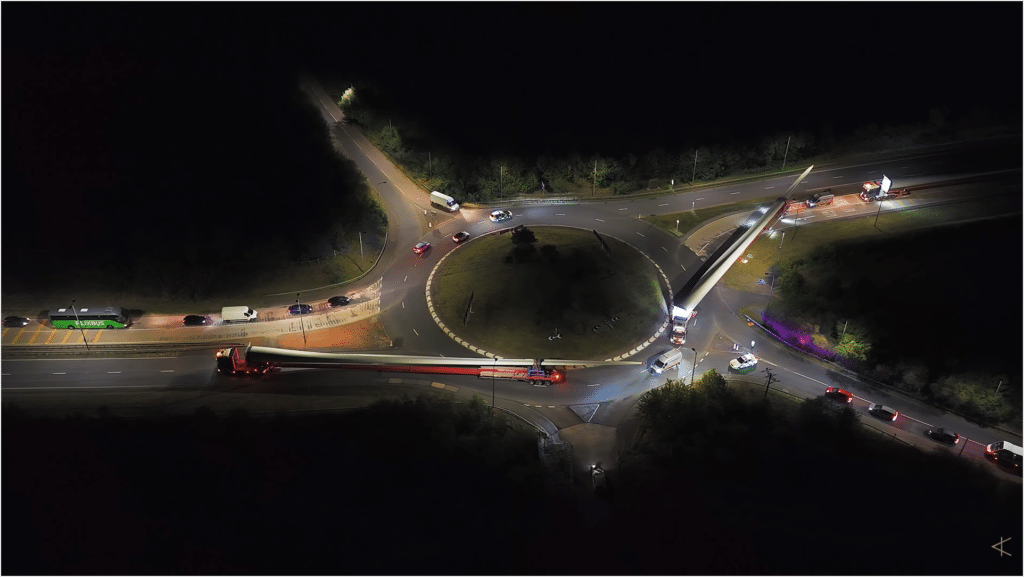
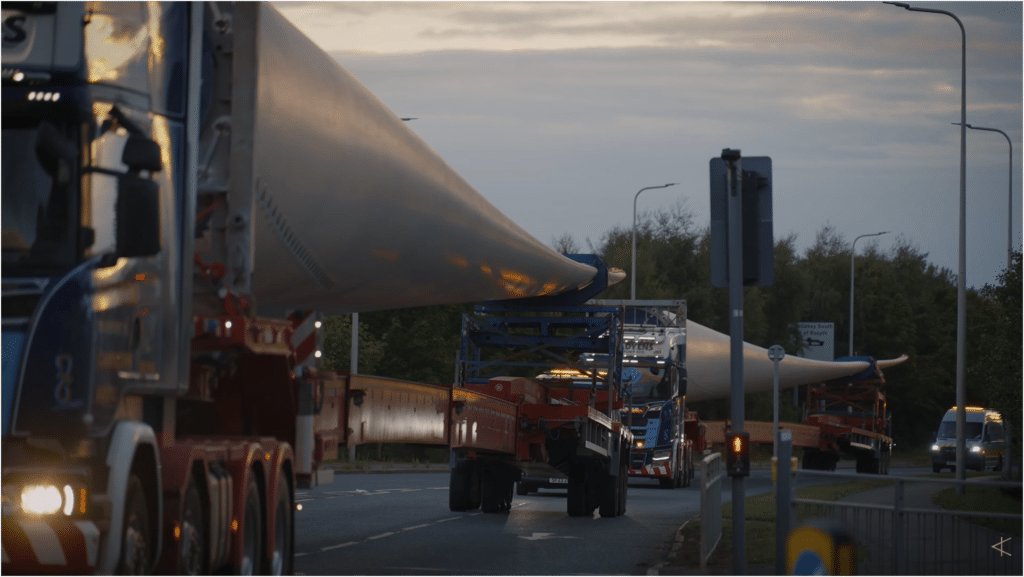
These blades are enormous, transported on specialist trucks and often moved at night to minimise disruption. The goal was to capture a cinematic shot of the blades crossing a bridge on their way from port to site — a visually powerful moment that symbolises the scale and complexity of renewable energy projects.
This is where drone video production becomes as much about planning as flying.
Why This Shot Was So Difficult
- The convoy was constantly moving
- Filming took place at night
- The blades are long, thin and hard to see in low light
- Timing had to be perfect to capture the bridge crossing
Missing the convoy wasn’t an option. There was no second take.
Real-Time Tracking Meets Drone Filming
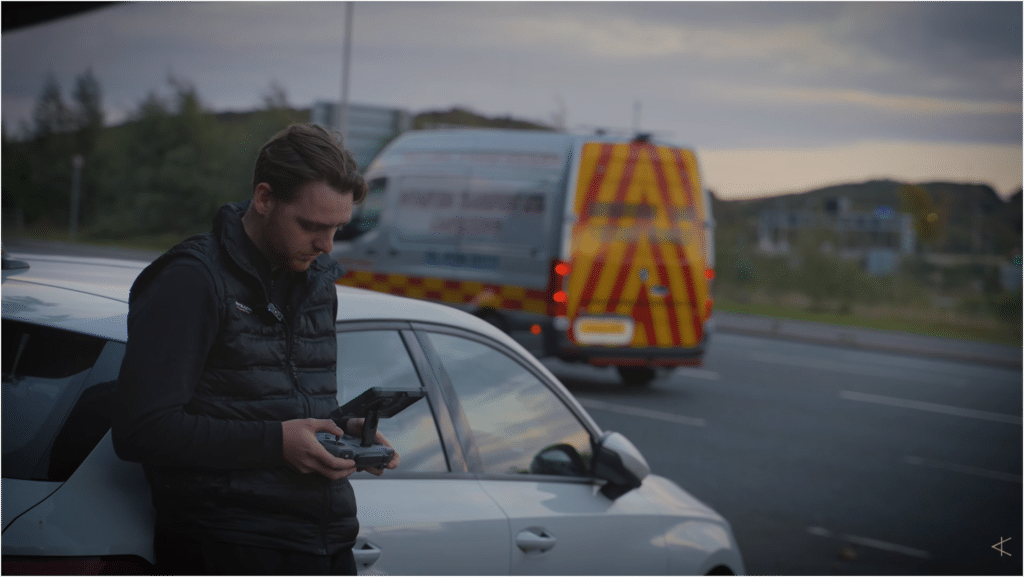
To solve the biggest problem — finding the convoy at the right moment — the crew coordinated directly with the truck driver. Using live location tracking, the drone operator could position ahead of the convoy and be ready before it arrived.
This level of coordination highlights an often-overlooked side of drone video production: communication. Great aerial footage isn’t just about equipment. It’s about working seamlessly with on-site teams, drivers, engineers and project managers.
The result? A high-impact bridge shot that captures motion, scale and drama in a single sequence.
Night Filming and High-Pressure Conditions
Night shoots push drone video production to its limits.
Low light, moving subjects and tight time windows all increase complexity. In this case, the turbine blades were especially challenging because their slim profile made them difficult to track visually once airborne.
Every decision mattered:
- Flight height
- Camera angle
- Distance from the convoy
- Battery life and wind conditions
This was described as the most stressful part of the entire operation — but also the most rewarding.
Equipment Matters: The Power of Modern Drone Cameras
Modern drones have changed what’s possible in industrial filmmaking. High-end models now offer:
- Exceptional low-light performance
- Stable footage in challenging conditions
- Cinematic image quality suitable for broadcast and documentary work
In this shoot, the camera quality stood out immediately once footage was reviewed. Even in near-dark conditions, the drone captured sharp, usable images that would have been unthinkable just a few years ago.
For drone video production, this means fewer compromises between safety, quality and creativity.
Completing the Shoot: Why Drone Video Production Is Worth It
By the end of the night, the team had secured the final shots needed to complete this stage of the documentary. It was more challenging than earlier tower-filming days, but the payoff was clear.
Drone video production delivered:
- A complete visual record of the project
- Cinematic footage for documentary storytelling
- Marketing and PR assets for future use
- A clear demonstration of logistical and engineering expertise
This kind of content doesn’t just look good. It builds trust, communicates competence and helps audiences understand complex processes quickly.
Why Drone Video Production Is Ideal for Renewable Energy Projects
Renewable energy projects like wind farms are visually impressive but operationally complex. Drone video production bridges that gap by showing both scale and detail in a single frame.
Key benefits include:
- Showing progress over time
- Communicating scale to stakeholders and the public
- Supporting planning, reporting and compliance
- Creating powerful content for campaigns, tenders and internal communications
For wind, solar and infrastructure projects, aerial filming has become less of a “nice to have” and more of a strategic tool.
Beyond the Footage: Storytelling From the Air
What made this project stand out wasn’t just the visuals — it was the story.
From turbines already standing, to empty pillars waiting for blades, to the dramatic arrival of the convoy, drone video production connected every stage into a single narrative. Viewers don’t just see what’s happening. They understand it.
That’s the real value of drone video production when it’s done properly.
Final Thoughts
Drone video production is no longer just about aerial shots. It’s about planning, coordination, storytelling and technical expertise — especially in industrial environments.
This wind farm project shows what’s possible when drones are used as part of a wider content strategy, not just as a camera in the sky. From long-term documentation to high-pressure night shoots, aerial filming continues to redefine how complex projects are captured and shared.
If you want your next industrial, infrastructure or renewable energy project to be seen — not just documented — drone video production is the place to start.